

Project description
STEM is becoming increasingly important at all levels of education. The development of every nation or state is increasingly based on modern and technologically advanced occupations based on STEM. Therefore, it is very important to include students in education in STEM fields in a timely manner in order to master the necessary skills for the professions of the future as soon as possible. Accordingly, STEM education should be included in educational programs from early education. The "NEW STEM Kutina - ALPHABET OF THE FUTURE" project directly contributes to strengthening the capacity of stakeholders in STEM teaching and learning in the area of the City of Kutina. The project is primarily aimed at teachers and students of the 5 primary schools founded by the City of Kutina. With this project, the city tries to focus on the fields of mathematics, technology and engineering in order to prepare students for successful continuation of education at the high school level, and tries to directly prepare them for the career challenges of a technologically advanced modern society. Kutina is a city in central Croatia, it is one of 19 local self-government units in Sisak-Moslavina County, it consists of 23 settlements and has about 25,000 inhabitants, of which about 15,000 live in the central part.

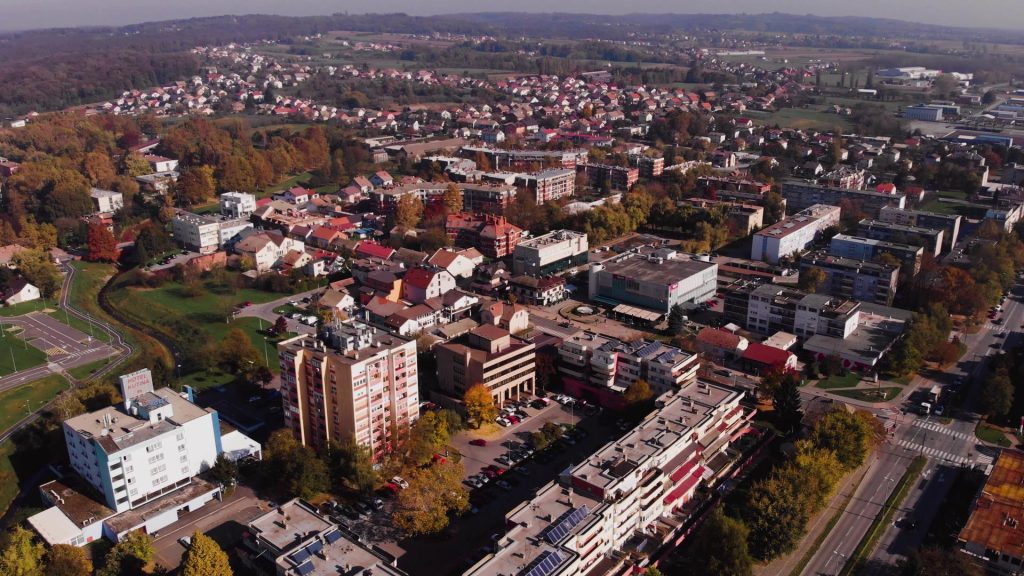
Kutina is an industrial city that has long based its prosperity and economic and social development on the exploitation of hydrocarbons and the petrochemical industry. Over time, Kutina moved away from heavily polluting industries and has been carefully building a different image for years, a portrait of a modern, urban environment, a healthy city according to "human standards". Care for the environment, public policies and strategically selected development projects are directed towards the development of highly productive and competitive industries, especially the tertiary sector, and the development of the "city of technology". Since the City of Kutina is trying to position itself in the light of new technologies and advanced education, which it certainly is, considering the high-tech industry that is its main branch of the economy, this project is one of the steps in that direction. The project equips high-tech STEM classrooms in primary schools, which will enable teachers to progress in the development of knowledge and competences in the STEM field, and thus the level and quality of primary school education in the STEM field will also be raised for students. Through the project, special emphasis is placed on students with special educational needs, both gifted and students with difficulties (in development, in learning, in behavior or conditioned by special factors). In addition, the project aims to strengthen social and economic cohesion through long-term economic growth, sustainable development and in an advanced environment of the modern labor market. Kutina is a city with a developed manufacturing industry where, in addition to the chemical industry, the electronic industry (SELK dd. production of electronic components for the automotive industry), metal processing industry (ALMOS doo Hidraulika Kutina dd.), Zigler (factory of fire engines) or Agrivi (IT sector) is developing.
In Kutin primary schools in the school year 2020/2021. about 1,800 students were enrolled, whose education is taken care of by about 350 teachers, professors and other educational workers. The data show that Croatian students achieve below-average results compared to students from OECD countries. In HR, less than 25% does not reach the initial level of competence in the field of natural sciences, so it is not surprising that according to data from 2018, Croatia achieved a below-average result of 472 points and is in 36th place in the overall ranking of 78 countries. In mathematics, our students are also below average, and 32% of them do not have basic mathematical competence. According to data from 2018, Croatia achieved a below-average score of 464 points on the tests and is in 40th place in the overall ranking of 78 countries. The local situation reflects the national state of students' skills and knowledge in the STEM field. Although a large number of Kutin students participate in competitions in mathematics, chemistry, physics, computer science, etc., their scope is mainly county competitions. The reasons for this are: lack of motivation to learn, poor equipment, lack of modern innovative teaching aids, and extracurricular and extracurricular activities in the STEM and IT fields. By modernizing teaching, extracurricular and extracurricular activities, the motivation of students and teachers for teaching and learning in the STEM field would increase. The situation is similar with the use of ICT. Through the "Let's work together" project from the Erasmus+ program, a survey was conducted in the Kutina area on a sample of 100 primary school students about the use of computers for educational purposes, knowledge of basic computer programs and use of the Internet. From the answers, it can be seen that half of them sometimes use the computer for studying at home and at school. Students know the basic computer programs best: Word, PowerPoint, and to a lesser extent Excel and Photoshop. Most use the computer for fun and more than half use the Internet often, and 2% students said they never use the Internet. They mainly use the Internet for entertainment, 78% of them, while only 5% for learning.. This shows the importance of using ICT in the learning process, especially in today's time of the global pandemic of COVID-19 when most of life has been carried out through it. The project, that is, the activities directly solve the problem of insufficiently developed competencies and skills of teachers and students of the City of Kutina in the STEM field, all with synergistic action in the field of active citizenship and the development of entrepreneurial skills.

The general goal of the project is to improve the capacity of primary school education in the area of the City of Kutina by equipping 5 STEM classrooms, raising the STEM skills of 100 teachers and other educational workers and 600 students in 5 primary schools, together with improving their abilities in the field of ICT application in education and education, development of active citizenship and development of entrepreneurship. The target group of the project are: 1. teachers and other educational workers in institutions for primary school education from the area of the City of Kutina; 2. students enrolled in elementary education institutions, including students with special educational needs; 3. 5 primary schools from the area of the City of Kutin. Indirect effects of the Project are related to identifying the end users of the Project. The project identifies the following as end users: 1. The applicant, the City of Kutina, and project partners who, by participating in the implementation of the project, will strengthen their professional and implementation capacities in the STEM field, active citizenship, the use of ICT in education, entrepreneurship development, and capacities in the field of project implementation. financed by EU funds, donor funds, etc. 2. Technologically advanced companies from the area of the City of Kutin, its surroundings and the entire Republic of Croatia, which through the improvement of the education system in the field of STEM, which is based on the real needs of employers, will get quality employees with whom they will be able to improve own production processes and achieve better business results; 3. the local community from the area of the City, for the reason that the development of the economy, the increase in employment and the employment of high-tech employees will be indirectly stimulated, so that the City and its surroundings will become a more desirable place to live and work, and indirectly the revenues of the local budget will increase, which will again further invest in the development of the local community, i.e. meeting the educational, social, cultural, sports and other needs of the local population. Donor funds, in addition to the contribution to strengthening the STEM skills of teachers and students, need to be invested in this project for the reason that there is a pool of technologically advanced companies in Kutina and its surroundings (Petrokemija, Selk, Turbomehanika, Zigler, Agrivi, Hidraulika Kutina, Pfarmas Popovača, Cjevomont Kutina and others .) which in the future will benefit from highly educated and specialized experts in the field of STEM.
The project is in accordance with a number of strategic documents at the international and national level: 1. Regulation on the implementation of the EEA financial mechanism for the period from 2014-2020: by implementing activities aimed at encouraging the STEM skills of 100 teachers and other educational workers and 600 students in 5 primary schools from the area of Kutina, together with the improvement of their abilities in the field of ICT application in upbringing and education, the development of active citizenship and the development of entrepreneurship, contributes to the realization of Art. 1.2. in such a way that economic and social differences in the European Economic Area are reduced and bilateral relations between donor and beneficiary countries are strengthened. Activities are in accordance with Art. 2.1. and are aimed at achieving goals within the priority sectors: "Innovation, research, education and competitiveness; "Social inclusion, youth employment and poverty reduction; "Culture, civil society, good governance and the foundations of rights and freedom". Activities contribute to the goals of "Communications of the Commission to the European Parliament, the Council, the European Economic and Social Committee and the Committee of the Regions - School development and excellence in teaching as prerequisites for a successful life": establishment of better and more inclusive schools; support for teachers, teachers and school principals for excellence in teaching and learning and more effective, fair and efficient management of the school education system. Strategies for the fight against poverty and social. of exclusion, P: Ensuring the conditions for a successful fight against poverty and social exclusion and reducing inequality in society: education and lifelong learning with the aim of early inclusion in the education system and better success in the education of people in such a way that in the City of Kutina children and students from an early age they enable quality and accessible services, leisure activities, primary and secondary education, and incentives for higher education and lifelong learning, as well as the creation of opportunities for raising the employment rate and able-bodied people, i.e. raising the employability of disadvantaged groups.
